
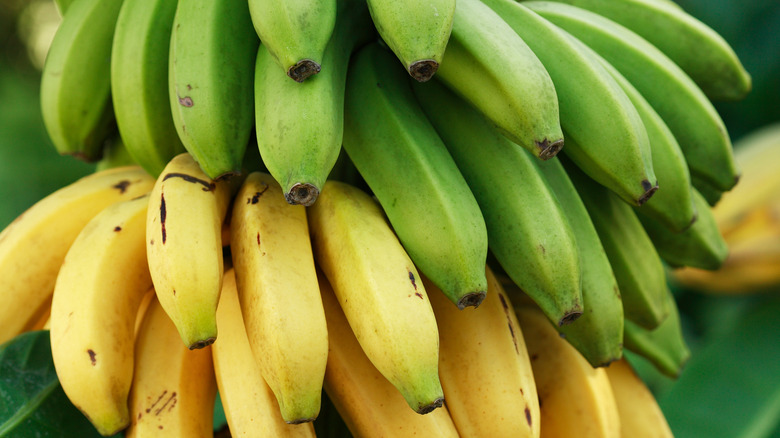
Bananas are one of the most widely consumed fruits in the world, known for their sweet taste, creamy texture, and vibrant yellow color when ripe. They belong to the Musa genus and are native to Southeast Asia, but are now grown in many tropical and subtropical regions. Bananas are not only a convenient snack but also a versatile ingredient in both sweet and savory dishes.
Key characteristics of bananas include:
Shape and Size
Bananas are elongated and slightly curved, typically measuring 6 to 10 inches in length.
Color
When ripe, the peel is bright yellow, although some varieties remain green or turn red or purple when mature. The flesh inside is usually white to cream-colored.
Flavor
Ripe bananas have a sweet, mildly tangy flavor with a smooth, creamy texture. Unripe bananas are firmer and less sweet, often used in cooking rather than eaten raw.
Nutritional Benefits: Bananas are rich in essential nutrients, making them a healthy dietary choice. They are an excellent source of:
Potassium
Supports heart health and helps maintain proper muscle function.
Vitamin C
An antioxidant that boosts the immune system.
Vitamin B6
Important for brain health and energy metabolism.
Dietary Fiber
Aids in digestion and promotes a feeling of fullness.
Culinary Uses: Bananas can be enjoyed in numerous ways:
Fresh
Eaten as a snack, added to breakfast cereals, yogurt, and fruit salads.
Baking
Used in recipes for banana bread, muffins, and cakes.
Smoothies
Blended into smoothies for natural sweetness and creamy texture.
Cooking
Unripe bananas, particularly plantains, are often cooked in savory dishes, fried, boiled, or baked.
Storage: Bananas should be stored at room temperature until they reach the desired ripeness. Ripe bananas can be refrigerated to extend their freshness, although the peel may darken. Overripe bananas can be frozen and used later in smoothies or baking.
Bananas are cherished for their convenience, nutritional value, and versatility in the kitchen, making them a staple in households worldwide.